Premier Construction Services in Utah: Remodeling Done Right
Commercial Remodeling & Tenant Improvement Contractors in Utah — All American Contractors’ Expert Construction and Remodeling Services

Commercial remodeling and tenant improvements in Utah update existing business spaces with targeted design, engineering, and construction work that improves function, code compliance, and customer or employee experience. This guide explains what commercial remodeling and tenant improvements (TIs) are, how they differ from new construction, and why Utah organizations choose tailored TI strategies to get more from their space and budget. You’ll find typical scopes — interior reconfiguration, MEP upgrades, finishes, and code work — along with project phases, cost ranges, and ROI benchmarks relevant to Salt Lake City and the Wasatch Front. We also cover service types (office, retail, industrial, healthcare), sustainability and smart‑tech options, and practical tips for managing schedules and permits locally. Throughout, we show how a local general contractor coordinates project management, permitting, and design to deliver predictable results for tenants and property owners.
What Are Commercial Remodeling and Tenant Improvements in Utah?
Commercial remodeling and tenant improvements (TIs) are renovations that bring leased or owned business spaces up to operational, aesthetic, and code expectations. Typical TI work includes reworking layouts, upgrading mechanical/electrical/plumbing (MEP) systems, improving accessibility and life‑safety features, and refreshing finishes to reflect a brand. Utah’s commercial market — from Salt Lake City retail corrid
ors to industrial parks in the Silicon Slopes — affects permitting and scope, so requirements vary by submarket and occupancy. Knowing these differences helps property managers and tenants plan scope and budget, limit downtime, and maximize the value of tenant improvement allowances and capital investments.
How Does Commercial Remodeling Enhance Utah Business Spaces?
Commercial remodeling makes spaces work better for real operations. Reconfiguring circulation, improving lighting, and upgrading HVAC increase comfort and productivity while reducing operating costs. For retail and hospitality, focused storefront and merchandising updates boost curb appeal, accessibility, and conversion. Together, these improvements create more usable, revenue‑generating space, encourage longer tenant stays, and can raise property values — all of which influence lease negotiations and TI allowances.
Remodeling improves usability, efficiency, and brand presentation, shaping how customers and employees perceive a space.
Modernized MEP systems lower energy use and maintenance while improving indoor environmental quality for occupants.
Strategic layout changes convert underused areas into revenue opportunities like collaboration zones or product displays.
Those outcomes drive decisions about project scope and the services a contractor should offer.
What Types of Tenant Improvements Does All American Contractors Provide?

Common tenant improvements include office build‑outs, retail fit‑outs, MEP modernizations, and accessibility upgrades that prepare leased space for occupancy. Office TIs can range from private suites and conference rooms to IT closets and acoustic solutions. Retail work emphasizes storefronts, fixtures, and point‑of‑sale integration. Specialty projects cover medical exam rooms, lab support spaces, and industrial production layouts. The right scope depends on lease terms, TI allowances, and timeline — which determine whether a space needs a light refresh or a full build‑out. All American Contractors manages these TI categories while coordinating permits and vendor relationships to reduce change orders and schedule risk.
Why Choose All American Contractors for Commercial Construction and Remodeling in Utah?
Picking the right contractor reduces schedule risk, controls cost, and ensures compliance. A capable general contractor coordinates design, permits, subcontractors, and quality control to turn plans into code‑compliant, usable space. Local experience with Salt Lake City permitting, trusted subcontractor networks, and regional supply considerations shortens lead times and cuts avoidable delays. These capabilities help decision‑makers weigh budget, timeline, and long‑term operational benefits when selecting a partner.
All American Contractors focuses on commercial building and tenant improvements across Utah. We combine local permitting know‑how, end‑to‑end project management, and hands‑on craftsmanship to convert retail, office, and specialty spaces into efficient, buildable solutions. That mix of local experience and coordinated delivery leads to faster permit approvals, tighter subcontractor coordination, and clearer communication through the project lifecycle — which keeps work predictable and minimizes disruption for tenants and owners.
What Makes AAC Utah’s Premier General Contractor for Tenant Improvements?
We bring local market knowledge, full project coordination, and proven methods to limit scope creep and schedule slippage. Familiarity with Salt Lake City permitting pathways and local vendor relationships speeds submissions and helps secure competitive trade pricing. Transparent processes — regular schedule updates, simple change‑order workflows, and documented quality checks — reduce surprises and build client confidence. That translates into fewer unexpected costs and a smoother route from approval to occupancy for tenants and property owners.
How Does AAC Tailor Commercial Spaces to Specific Business Needs?
Tailoring a space starts with discovery — we map your operational needs to spatial solutions, then collaborate on design and value engineering to meet budget goals. For retail clients, that means prioritizing storefront visibility, merchandising sightlines, and checkout flow. For office tenants, we focus on acoustics, IT readiness, and flexible meeting areas. Our approach balances design intent with practical construction sequencing so lease constraints and phased occupancy needs are respected. The result: spaces that support business goals while controlling costs and minimizing downtime.
What Are the Key Commercial Remodeling Services Offered by All American Contractors?
Below we outline common commercial remodeling services and when each is the right fit. These categories reflect what Utah owners and tenants typically need across offices, retail, industrial, and healthcare settings. The descriptions help stakeholders decide whether a TI, full remodel, or phased renovation best meets operational and budget realities.
Core remodeling services: interior build‑outs, MEP upgrades, finish carpentry, and code compliance work for commercial tenants.
Design‑build: integrate design and construction under one contract to speed delivery and reduce handoff risk.
Phased construction and tenant coordination: minimize operational disruption for occupied properties, critical in healthcare and industrial sites.
Service
Typical Deliverables
Ideal For
Office Tenant Improvements
Open plans, conference rooms, IT closets, acoustic solutions
Professional services firms, startups, satellite offices
Retail Build-Outs
Storefront upgrades, fixture installation, lighting and signage coordination
Retail chains, boutiques, foodservice operators
Industrial & Healthcare Renovations
MEP upgrades, phased construction, compliance documentation
Warehouses, clinics, labs, production facilities
How Do Office Tenant Improvements Improve Productivity and Flexibility?
Office TIs improve productivity by aligning layout with collaboration patterns, privacy needs, and circulation. Providing IT backbone readiness, dedicated collaboration zones, and acoustic treatments reduces friction and supports hybrid work. Flexible partitions and modular furniture let organizations reconp without major demolition, stretching the TI investment. Measurable benefits include better space utilization, lower reconfiguration costs, and faster team onboarding into productive environments.
What Retail Remodeling Solutions Does AAC Provide in Salt Lake City?
Retail remodeling focuses on storefront presence, interior flow, fixtures, lighting, and accessibility to increase engagement and conversions. Thoughtful fixture placement and lighting guide customer flow while compliant accessibility improves the experience for all visitors. Our retail work also coordinates signage, point‑of‑sale infrastructure, and merchandising to match brand presentation with operations. Those improvements increase dwell time, simplify navigation, and support higher sales per square foot.
How Are Industrial and Healthcare Facility Renovations Managed by AAC?
Industrial and healthcare projects require tight MEP coordination, staged work to keep operations running, and strict code compliance. Many jobs need phased construction to preserve critical functions or patient care while adjacent upgrades proceed. We build phased schedules with facility managers, engineers, and inspectors to contain disruptions and keep inspections predictable. That phased, compliant approach reduces downtime risk and ensures systems perform to safety and performance standards.
How Does the Commercial Remodeling Process Work with All American Contractors?
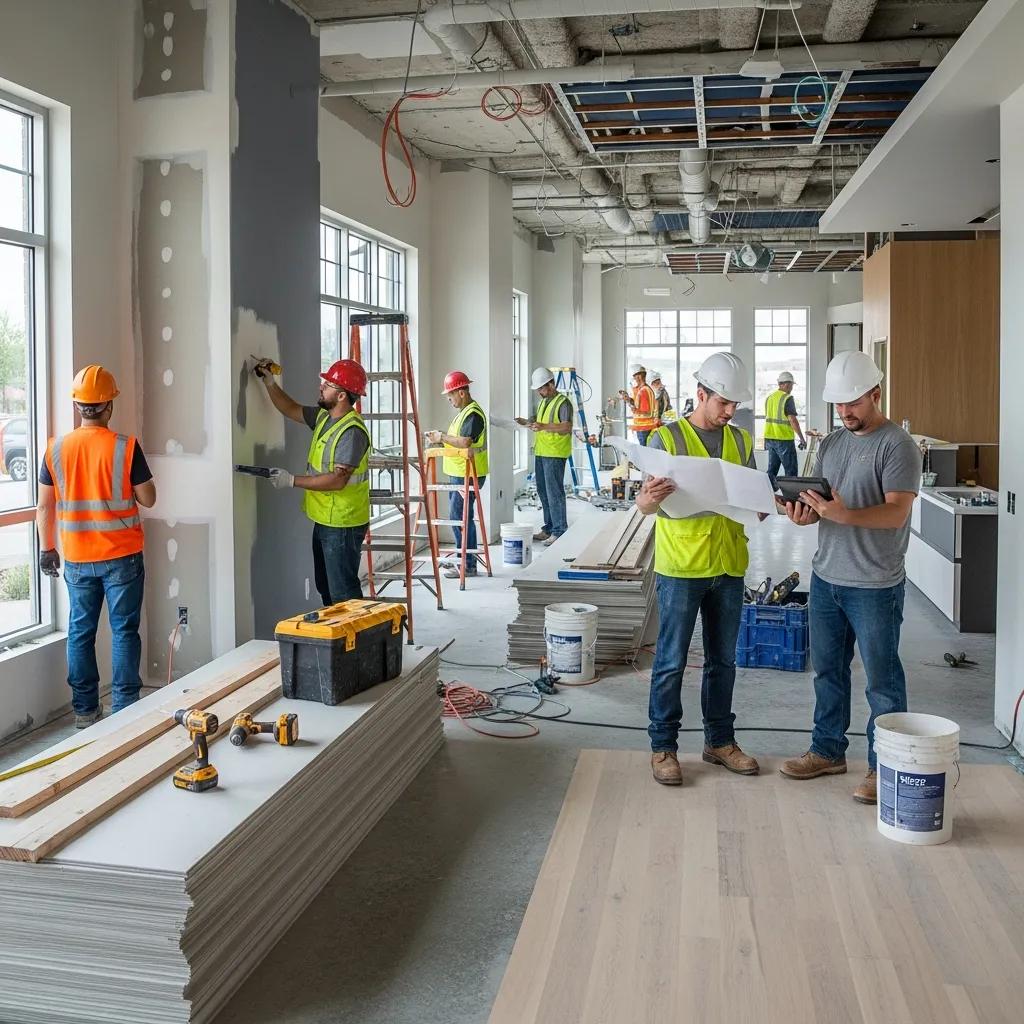
A reliable remodeling process moves from discovery to design, permitting, construction, and closeout with clear responsibilities and timelines. Early discovery defines scope, budget, and schedule targets, which guides permit strategy and design choices that balance aesthetics with operations. During construction, coordinated subcontractor schedules, weekly progress updates, and documented quality checks keep projects on track. Closeout covers final inspections, warranty handover, and as‑built records to support facility management and tenant transitions.
An introductory table below shows phases, activities, and client inputs so expectations are clear at every stage.
Phase
Activities
Client Input Required
Consultation & Discovery
Scope definition, budget alignment, site assessment
Program priorities, budget targets, occupancy constraints
Design & Permitting
Drawings, code review, permit submissions
Approvals on design, timely documentation for permits
Construction & Inspections
Site work, MEP upgrades, finishes, inspections
Regular progress meetings, approvals on changes
Closeout & Warranty
Final inspections, punchlist, as‑built documents
Acceptance of deliverables, warranty coordination
What Are the Steps from Consultation to Completion?
Most commercial remodels follow a concise six‑step process:
Discovery & Budget Alignment: Define goals, constraints, and an initial budget to frame scope.
Schematic Design & Value Engineering: Produce concept drawings and evaluate cost‑smart alternatives that protect function.
Permitting & Shop Drawings: Prepare detailed documents for approvals and coordinate with local authorities.
Construction Execution: Carry out construction with phased scheduling and quality checkpoints.
Inspections & Punchlist Resolution: Complete inspections, finish punchlist items, and ready the space for occupancy.
Closeout & Warranty Handover: Deliver as‑built documents, owner training, and warranty information to facility managers.
Clear decision points at each step reduce costly mid‑project changes and support timely occupancy.
How Does AAC Ensure Timely and Cost-Effective Project Delivery?
We control time and cost through disciplined schedule management, subcontractor coordination, and strict change‑order practices. Weekly coordination meetings, milestone invoicing, and documented QA checkpoints limit surprises and keep everyone aligned. Value engineering during design finds cost‑effective alternatives that preserve program goals and lower lifecycle costs. Those practices create a predictable delivery framework that mitigates risk and maintains budget fidelity through construction.
What Are the Costs and ROI of Commercial Remodeling and Tenant Improvements in Utah?
Costs and ROI vary by project type, finish level, and local code or permitting needs. Typical cost‑per‑square‑foot ranges differ for light TIs, full TIs, and complex medical or industrial renovations because of MEP complexity and regulatory demands. Evaluating ROI combines direct revenue impacts — like higher sales per square foot for retail — with operational savings such as reduced energy costs from mechanical upgrades. Clear benchmarking and projected ROI help owners and tenants make data‑driven scope and financing decisions.
The table below compares project categories and what they typically mean for budget and schedule.
Project Type
Typical Cost Range (per sq ft)
Typical Timeline
Light Tenant Improvement (finishes, minor MEP)
$40–$90
4–8 weeks
Full Office TI (layout, finishes, IT infrastructure)
$90–$180
8–16 weeks
Retail Build-Out (storefront, fixtures, signage)
$100–$200
8–20 weeks
Industrial/Healthcare Renovation (MEP upgrades, phased work)
$150–$300+
12–30+ weeks
How Much Do Commercial Remodeling Projects Typically Cost in Utah?
Key cost drivers include necessary MEP upgrades, code‑required fire and accessibility work, finish quality, and permitting timelines — all influenced by building type and Salt Lake City submarket. Light TIs focus on cosmetic and minor system work and sit at the lower end of the range, while healthcare and industrial projects need specialized systems and phased sequencing that increase cost and schedule. Early engagement with a contractor and designer to identify allowances, compliance costs, and phased needs reduces the risk of late change orders. Understanding these drivers helps set realistic contingencies and timelines.
What Are the Long-Term Benefits and ROI for Utah Businesses?
Remodel investments produce measurable returns: higher revenue per square foot for retail, better employee productivity and lower turnover for offices, and lower operating costs with energy‑efficient system upgrades. HVAC and lighting retrofits cut utility bills and may qualify for local incentives or faster payback. Improved layouts and modern finishes increase tenant appeal and can command higher rents or sales. Intangible benefits — stronger brand alignment, improved customer perception, and safer, code‑compliant spaces — also boost long‑term asset value and tenant retention. When aligned with strategic goals, remodel spending delivers clear financial and operational upside.
When you’re ready to move forward, All American Contractors coordinates feasibility, budgeting, and phased construction planning so renovation scope aligns with your operational goals and ROI targets, while minimizing disruption to business.
How Is Sustainability and Technology Integrated into AAC’s Commercial Construction Projects?

Sustainability and smart‑technology lower lifecycle costs and improve occupant experience when integrated thoughtfully. Common measures include LED lighting retrofits, upgraded HVAC controls, better insulation and glazing, and low‑emitting finishes to improve indoor air quality. On the technology side, Virtual Design & Construction (VDC), 3D coordination, and building automation reduce clashes, speed schedules, and enable smarter post‑occupancy operations. Adding these elements early in design preserves budget and increases long‑term value through operational savings and stronger marketability.
Here’s a short checklist of sustainable and tech measures commonly used on Utah commercial projects and their benefits.
Install LED lighting and daylight controls to cut energy use and maintenance costs.
Upgrade HVAC with variable controls and economizers for better efficiency and comfort.
Use VDC/3D modeling in design to catch clashes early and minimize rework in the field.
Including sustainability and smart technology in remodels produces energy savings and healthier indoor environments that attract tenants and customers.
What Sustainable Building Practices Does AAC Use in Utah Remodeling?
Our sustainable practices focus on material choices, energy systems, and waste reduction to lower lifecycle impacts. We specify durable finishes, low‑VOC materials, and construction waste diversion to reduce long‑term maintenance and improve indoor air quality. HVAC and lighting upgrades deliver immediate operating‑cost reductions and help meet local efficiency programs. These measures raise building marketability and tenant satisfaction while supporting community sustainability goals.
How Does AI and Smart Technology Improve Commercial Construction Efficiency?
AI and smart technologies — schedule optimization, clash detection, and predictive procurement — increase predictability and reduce delays. VDC tools produce coordinated 3D models that flag conflicts before they reach the field, cutting rework and protecting the schedule. Smart building controls after occupancy enable ongoing operational optimization for energy and comfort, turning construction investments into continuous savings. Better design coordination leads to fewer field problems and measurable lifecycle benefits.
AI‑driven scheduling reduces idle time by optimizing subcontractor sequences around real‑time constraints.
VDC/3D coordination prevents clashes that cause costly rework and timeline slippage.
Smart controls turn construction investments into ongoing operational savings through data‑driven adjustments.
These integrated approaches help owners and tenants convert a one‑time construction spend into sustained efficiency and performance.
If you need detailed budget estimates, feasibility analysis, or phased renovation planning, All American Contractors can scope and manage your project to meet commercial goals and local requirements.
Frequently Asked Questions
What is the difference between commercial remodeling and tenant improvements?
Commercial remodeling is a broad term for renovating business spaces and can include structural work, system upgrades, and aesthetic changes. Tenant improvements (TIs) are specific changes to a leased space to meet a tenant’s needs — typically interior layout, finishes, and compliance items. All TIs are a form of commercial remodeling, but not all remodeling is a TI — some projects are owner‑led or involve more extensive work beyond tenant scope.
How can businesses finance their commercial remodeling projects?
Financing options include bank loans, lines of credit, and commercial real estate loans. Many tenants use landlord‑provided tenant improvement allowances to cover part of the cost. Grants or incentives for energy‑efficient upgrades may also be available depending on local programs. It’s important to evaluate all options and choose financing that fits your budget and project timeline.
What are the common challenges faced during commercial remodeling projects?
Common challenges include managing timelines, coordinating multiple subcontractors, and navigating permitting. Unexpected conditions — such as antiquated systems or hidden structural issues — can cause delays and added costs. Clear communication and experienced project management reduce risk. Working with a contractor familiar with local regulations and similar projects helps keep the job on schedule and minimizes business disruption.
How do I choose the right contractor for my remodeling project?
Choose a contractor with proven experience in similar commercial projects and solid local references. Verify their understanding of building codes and permitting in your area. Ask for detailed proposals, realistic timelines, and clear communication practices. A contractor who listens, provides transparent pricing, and aligns with your goals is the best partner for a successful remodel.
What role does sustainability play in commercial remodeling?
Sustainability reduces environmental impact through energy‑efficient systems, responsible material selection, and waste reduction. Green practices lower operating costs, improve indoor air quality, and increase tenant appeal. Many businesses prioritize sustainability to meet regulations and customer expectations. Integrating sustainable measures can also boost property value and long‑term savings.
What are the typical timelines for commercial remodeling projects?
Timelines depend on scope and complexity. Light tenant improvements often take 4–8 weeks. Full office renovations typically run 8–16 weeks. More complex industrial or healthcare renovations may take 12 weeks or more because of phased work and stricter regulations. Early planning and open communication with your contractor help establish reliable schedules.
How can technology improve the commercial remodeling process?
Technology improves predictability and coordination. VDC and 3D modeling reduce clashes and rework. Project management software streamlines communication, scheduling, and budgeting. Smart building technologies can be integrated during the remodel to optimize energy and comfort after occupancy. These tools help deliver better outcomes with fewer surprises.
